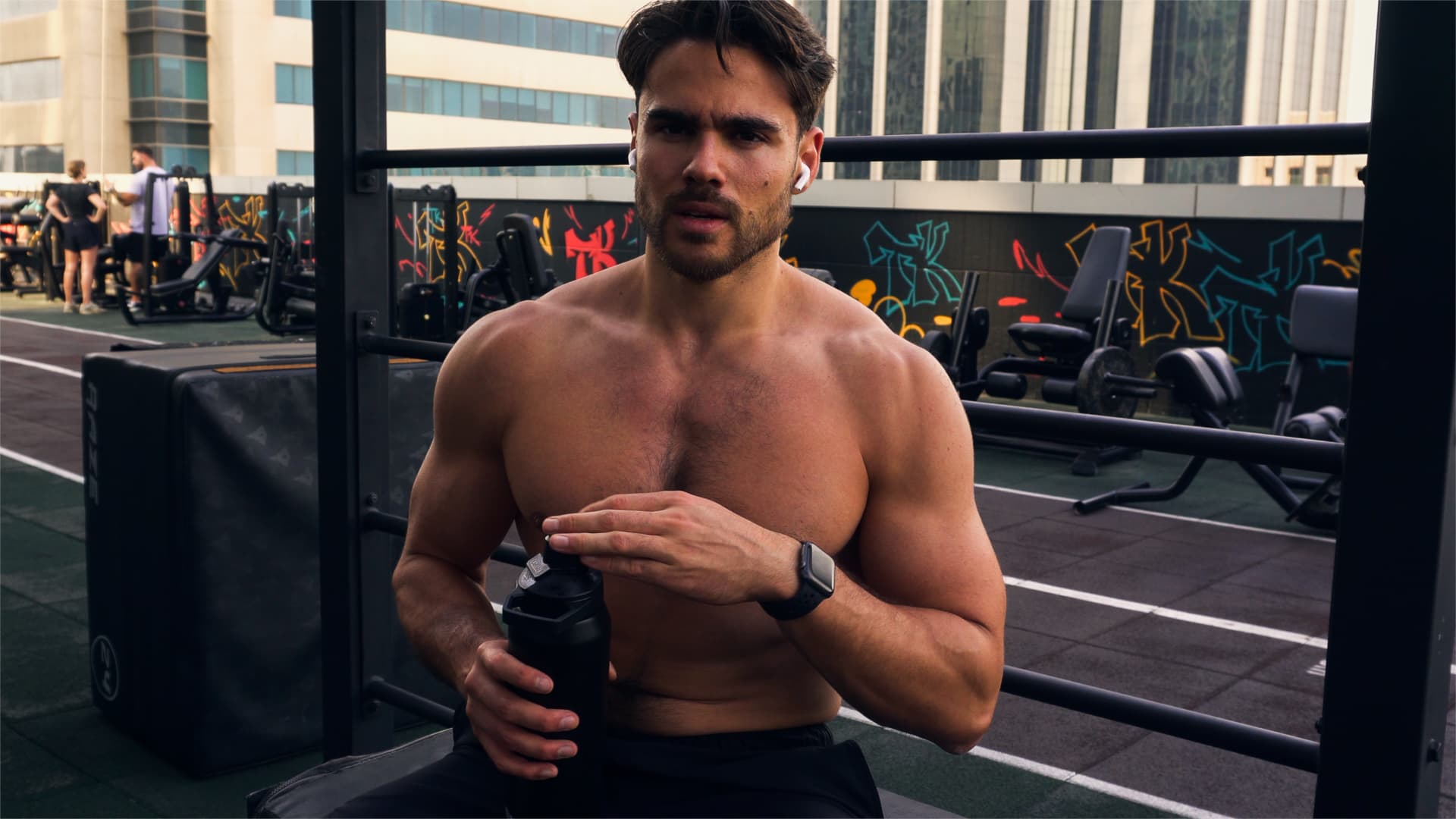
People always ask what program I follow. They expect something complex. Periodization schemes. Fancy exercise selection. Some secret methodology that explains the results.
The truth is almost embarrassingly simple.
For most of the last decade, my training has revolved around four movements. That's it. Four movements done consistently, with progressive overload, for years.
This post is about those movements, how I structure them, and why simplicity beats complexity for almost everyone.
The Problem With Complex Programs
Before I share the program, I need to explain why I abandoned complex training.
When I started, I followed the standard bodybuilding approach. Multiple exercises per body part. Isolation movements to "sculpt" each muscle. Training splits that hit everything from different angles. The programs were intricate and felt very scientific.
They also didn't work nearly as well as what I do now.
The issue with complexity is that it creates too many variables. When you're doing 15 different exercises across five training days, how do you know what's working? How do you apply progressive overload when your attention is scattered across so many movements?
You can't. So you end up doing a lot of stuff without getting better at any of it.
The other problem is adherence. Complex programs require complex schedules. Miss one day and the whole structure falls apart. Life gets in the way, and suddenly you haven't completed a full training week in months.
Simple programs are robust. They survive busy weeks, travel, unexpected life events. And because they focus your attention on a few key movements, you can actually track progress and apply overload effectively.
The Four Movements
Here's what I've built my physique on:
1. Weighted Pull Ups
The king of upper body pulling. Grab a bar, hang weight from your waist, and pull yourself up. Nothing develops the back, biceps, and grip like heavy pull ups.
I started doing bodyweight pull ups and couldn't do more than a few. Now I can do sets with significant weight added. The progression took years, but the results are undeniable.
2. Weighted Dips
The counterpart to pull ups. This movement builds the chest, shoulders, and triceps in a way that no bench press variation can match. The range of motion is greater, and the stabilization requirements are higher.
Same approach: add weight over time, progress gradually, be patient.
3. Squats
Heavy squats, usually barbell back squats. This is the foundation of lower body development. Quads, glutes, hamstrings, core stability. One movement that trains everything below the waist.
I've experimented with front squats, goblet squats, and various other leg movements. They all have their place. But heavy back squats remain the core.
4. Overhead Press
Standing press, barbell or dumbbells. Pushing weight directly overhead. This builds the shoulders and triceps, and because you're standing, it demands core stability and full body coordination.
I prefer standing presses to seated ones because they're more demanding and more transferable to real world capability.
Why These Four
These movements share common characteristics that make them ideal for building a physique naturally.
They're compound. Each one trains multiple muscle groups simultaneously. A pull up isn't just a back exercise. It's back, biceps, forearms, and core. A squat isn't just legs. It's quads, glutes, hamstrings, spinal erectors, and core. You get more stimulus per exercise, which matters when you're natural and have limited recovery capacity.
They allow heavy loading. These movements can be loaded progressively over years. You can always add a little more weight. That matters because mechanical tension, the feeling of lifting heavy things, is the primary driver of muscle growth.
They're scalable. Can't do a pull up yet? Do negatives or assisted variations. Can't squat heavy? Start with bodyweight or goblet squats. These movements have clear progression paths from complete beginner to very advanced.
They transfer to real life. Pulling your body up, pushing things overhead, squatting down and standing up with load. These are fundamental human movement patterns. Training them makes you capable, not just muscular.
The Structure
Here's how I typically structure a training week:
Day 1: Pull Focus Weighted Pull Ups as the main movement. Usually 4 to 5 working sets, moderate reps. Then some accessory pulling like rows or face pulls.
Day 2: Push Focus Weighted Dips as the main movement. Same structure. Some accessory pressing afterward if I feel like it.
Day 3: Legs Squats as the main movement. Sometimes I add Romanian deadlifts or lunges as accessories. But squats are the priority.
Day 4 (Optional): Mixed or Overhead Focus This day varies. Sometimes it's overhead pressing focused. Sometimes it's a lighter day with calisthenics skills. Sometimes I skip it entirely if life is busy.
That's three to four days per week. Sessions last 45 minutes to an hour. Not every day is maximum effort. Some days are heavier, some are lighter. The key is consistency over time.
The Rep and Set Scheme
I don't follow a fixed rep scheme. It varies based on how I feel and what phase of training I'm in.
Generally:
For the main compound movements, I work in the 4 to 8 rep range most of the time. Sometimes I go heavier with lower reps for a block. Sometimes I do a higher rep phase. But 4 to 8 is the sweet spot for building both strength and size.
I do 3 to 5 working sets per main movement. Not counting warmup sets. Just the hard sets that actually drive adaptation.
For accessories, I go lighter and higher rep. 8 to 15 reps usually. These are about accumulating volume on supporting muscles, not about maximal strength.
Progressive Overload: The Only Rule That Matters
Here's the part most people mess up.
You can follow the perfect program with the perfect exercises, but if you're not progressively overloading, you're not growing. Period.
Progressive overload means increasing the demands on your muscles over time. More weight. More reps. More sets. Harder variations. Something has to increase.
I track my workouts. Not obsessively, but enough to know what I did last time. Then I try to beat it, even if just by one rep or a small amount of weight.
This is the game. Last week I did weighted pull ups with 30kg for 6 reps. This week I try for 7 reps. Or I try 32.5kg for 6. It doesn't matter which variable you push, as long as you push something.
Over weeks and months and years, these small increases compound into massive progress. But you have to be intentional about it. You have to track and push. Otherwise you just spin your wheels doing the same thing forever.
What About Everything Else?
People always ask about the exercises I'm not mentioning. What about bicep curls? What about lateral raises? What about calf raises and ab work and all the other stuff?
Here's my honest answer: it doesn't matter much.
The four main movements cover probably 80% of your muscular development if you're natural. The other 20% is details. And while details matter at the margins, most people shouldn't be worrying about them.
If you're not strong at pull ups, dips, squats, and overhead pressing, no amount of bicep curls is going to make you look impressive. Get strong at the basics first. Add the details later if you want.
I do include some accessory work. Face pulls for shoulder health. Some direct arm work occasionally. Core stability exercises. But these are additions, not foundations. The foundations are the four movements.
Why This Works for Natural Lifters
If you're taking drugs, the rules are different. You have enhanced recovery. You can handle more volume. You can get away with inefficient programs because your hormones will bail you out.
Natural lifters don't have that luxury. We have limited recovery capacity. Every exercise we do has a cost. So we need to be efficient. We need to pick the movements that give the most return for the investment.
Compound movements are that return. Heavy pull ups, dips, squats, and presses build more muscle per unit of effort than any isolation movement. They also build functional strength that transfers beyond the gym.
When you're natural, you can't afford to waste time and recovery on exercises that don't matter. Focus on the few things that do.
The Time Investment
I train three to four hours per week total. That's it.
People imagine that looking fit requires living in the gym. It doesn't. It requires training smart and being consistent for years.
An hour, three to four times per week. Anyone can find that time if it's a priority. And with the right movements and progressive overload, that's enough to build and maintain an impressive physique naturally.
More is not better. Better is better. I'd rather do four focused sessions per week for 14 years than six unfocused sessions per week that burn me out in 14 months.
Common Questions
What about chest? Dips don't hit chest as well as bench press.
I disagree. Dips with a slight forward lean are excellent for chest development. But if you love bench pressing, swap it in for dips. The principle is the same: pick one main pushing movement and get strong at it.
What about deadlifts?
I include them sometimes as an accessory or rotation with squats. They're a great movement. But for me, squats are the priority. If you prefer deadlifts as your main leg movement, that's fine too. The point is to have one heavy lower body compound and progress it.
What about cardio?
I walk a lot. I do some conditioning work occasionally. But this post is about the program that built my physique, and that program is the four movements. Cardio is important for health but not primary for building muscle.
What about abs?
Heavy compound movements train your core intensely. My abs developed from squats and overhead pressing, not from crunches. If you want extra core work, add planks or hanging leg raises. But it's not essential.
Getting Started
If you want to try this approach, here's what I'd suggest:
Week 1 to 4: Establish baselines. Test where you are on each movement. Can you do pull ups? How many? Can you squat your bodyweight? Find your starting point.
Month 2 onward: Progress relentlessly. Every session, try to do a little more than last time. Track your workouts. Push the numbers up over time. Be patient.
Trust the process. You won't see dramatic changes in a month. But in six months, you'll notice. In a year, others will notice. In five years, you'll have built something genuinely impressive.
Start where you are. Use what you have. Progress over time. That's the whole system.
The Bottom Line
I've tried complex programs. I've tried training six days a week with elaborate periodization schemes. I've tried all the fancy stuff that fitness magazines and Instagram influencers promote.
None of it worked as well as focusing on four compound movements and getting stronger at them over years.
Weighted pull ups. Weighted dips. Squats. Overhead press. Progressive overload. Consistency. Time.
That's the program that built 80% of my physique. It's not sexy. It doesn't sell well. There's no secret to reveal or product to buy.
But it works. It's worked for 14 years. And it'll keep working for the next 40.
Stop looking for complexity. Embrace the basics. Get strong. Be patient.
The physique will follow. It always does.