I spent years doing it wrong.
Not completely wrong. I showed up. I was consistent. I made progress. But the foundation was broken, and it took me a long time to realize it.
I was bodybuilding. Training for looks. Trying to sculpt my body into something that would impress people. And while that approach can build muscle, it builds something else too: a fragile relationship with fitness that eventually collapses.
This is the story of how I escaped the bodybuilding trap, and what I do instead.
The Beginning: Chasing the Mirror
I started lifting at 16. I was chubby, insecure, and desperate to change how I looked. My motivation was pure shame.
Social media wasn't really a thing yet, so I learned from fitness magazines. And fitness magazines in the early 2010s were all about bodybuilding. Chest day. Back day. Arm day. Isolation exercises to "sculpt" each muscle group. Higher reps for "the pump."
I followed the programs religiously. I did my cable flyes and concentration curls and leg extensions. I chased the burn. I spent way too long looking at myself in the mirror between sets.
And it worked. Sort of.
I gained muscle. I looked better. Within a year or two, the body image issues that drove me to the gym were mostly resolved. Mission accomplished, right?
Not quite.
The Problem I Didn't See
Something was off, but I couldn't articulate what.
I was getting bigger, but I didn't feel strong. I looked like I could do things, but when I actually tried to do them, I struggled. Pull ups were hard. Dips were awkward. Anything that required my body to work as a unit felt foreign.
I had trained myself into a collection of parts instead of an integrated system.
This is the core problem with bodybuilding: it optimizes for appearance at the expense of function. The goal is to look strong, not to be strong. And when you chase that goal long enough, you end up with a physique that photographs well but can barely perform.
I watched guys at my gym with massive arms who couldn't do a single strict pull up. I saw guys with huge chests who couldn't press their own bodyweight overhead. The muscles were there. The capability wasn't.
They looked like athletes. They moved like beginners.
The Deeper Issue
But there's a more fundamental problem with bodybuilding, and it took me years to understand it.
Bodybuilding is based on a lie. The lie that you can separate how you look from what you can actually do.
Think about it. What is a bodybuilder trying to achieve? They're trying to look strong. Look healthy. Look capable. But they're not actually trying to be those things. The appearance is the goal, and the reality is irrelevant.
This is backwards.
Trying to look fit without being fit is like trying to look rich without having money. You can fake it for a while. Rent the car. Buy the watch on credit. Post the photos that suggest a lifestyle you don't actually live. But you know the truth. And eventually, so does everyone else.
I was renting a physique. I had the surface appearance of someone who was strong and athletic, but underneath it was hollow. I couldn't do anything impressive. I just looked like I could.
The Breakthrough
The shift happened when I discovered calisthenics.
I was browsing YouTube and stumbled on videos of guys doing muscle ups, front levers, human flags. Street workout stuff. And these guys looked incredible. Broad shoulders, developed backs, visible abs, athletic proportions.
But here's what caught my attention: they weren't training for looks. Not even a little bit.
They were training to do movements. To achieve skills. To master their own bodyweight. The physique was a side effect. A byproduct. Something that happened because they got really strong at fundamental human movements.
I had it completely backwards.
I was in the gym trying to sculpt the appearance of an athlete. These guys were just becoming athletes, and the look followed automatically.
[IMAGE PLACEHOLDER: Side by side comparison photos showing aesthetic bodybuilder pose vs functional calisthenics movement like a muscle up or front lever. Caption: "One trains for the mirror. One trains for capability. The results speak for themselves."]
The Experiment
I decided to test this idea.
I threw out my bodybuilding split. No more chest day, back day, arm day. No more isolation exercises. No more chasing the pump.
Instead, I focused on getting brutally strong at a handful of movements.
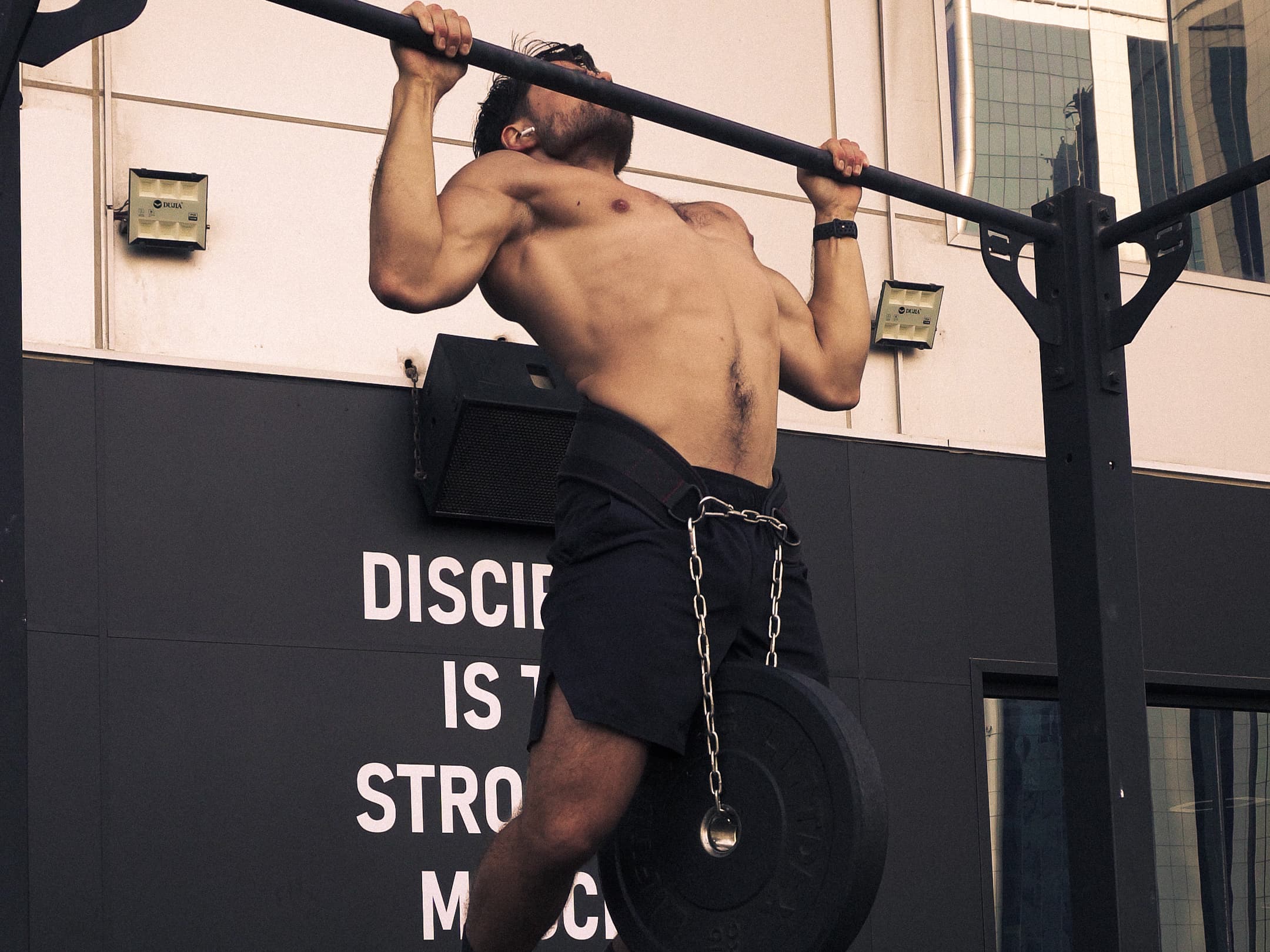
Weighted pull ups. I strapped weight to my body and pulled.
Weighted dips. Same thing. Add load, push.
Heavy squats. Nothing fancy. Just squatting heavy, consistently, over time.
Overhead press. Pushing weight over my head like humans have done forever.
That was basically it. Four movements. Three days a week. Progressive overload. Add weight or reps whenever possible.
The complexity of my training dropped dramatically. But the intensity skyrocketed. Every session was focused. Every session was hard. And every session was building something real.
The Results
Within six months, my physique changed more than it had in three years of bodybuilding splits.
My shoulders broadened. My back thickened. My core tightened up without doing a single crunch. For the first time in my training life, I looked athletic instead of just "in shape."
But more importantly, I could actually do things.
I could climb. I could pull myself over obstacles. I could press heavy objects overhead. I could sprint and jump and move my body through space with control.
The physique wasn't separate from the capability anymore. It was a direct expression of it. I looked strong because I was strong. Finally.
The Principle
Here's what I learned, and it's become the foundation of everything I do now:
You don't train to look strong. You train to be strong. The look follows.
A sprinter looks like a sprinter because they sprint. A gymnast looks like a gymnast because they manipulate their bodyweight through space. A wrestler looks like a wrestler because they grapple and fight.
None of these athletes are trying to sculpt anything. They're developing capability, and their bodies adapt to express that capability visually.
This is how it's supposed to work. Form follows function. The appearance is downstream of the reality.
When you flip this and try to create the appearance without the underlying function, you get bodybuilding. You get guys who look like they could do a pull up but can't. You get physiques built for photos instead of performance.
The Bodybuilding Trap
I call this the bodybuilding trap because it's hard to escape once you're in it.
When you train for looks, you start measuring yourself by looks. Every workout becomes about whether you can see results in the mirror. Every meal becomes about whether it will help or hurt your appearance. Your entire relationship with fitness becomes tied to something external and superficial.
This is exhausting. And it's fragile.
What happens when you get injured and can't train for a while? What happens when you get older and your body changes regardless of what you do? What happens when life gets busy and you can't maintain the rigid protocols that bodybuilding requires?
You lose the thing you built your identity around. And you have nothing to fall back on because you never developed real capability. You never became anything. You just looked like something.
The Alternative
Training for capability is completely different.
When you focus on what you can do instead of how you look, you build something durable. Your identity isn't tied to your reflection. It's tied to your abilities. And abilities are yours forever, even as they evolve with age.
A 70 year old who can do pull ups and move well has something valuable. A 70 year old who used to look good in photos has memories.
I'm 30 now. I've been training for 14 years. And for the first time, I'm thinking about what I want my fitness to look like at 50, 60, 70. The answer isn't a physique. It's a set of capabilities. The ability to move without pain. The strength to be useful. The resilience to stay active for decades.
Bodybuilding can't give you that. It can only give you a temporary appearance that fades the moment you stop the rigid protocols that created it.
What I Do Now
My training is simple.
I focus on fundamental human movements: pushing, pulling, squatting, hinging, carrying. I use compound exercises that train multiple muscles at once. I progressively overload over time, adding weight or difficulty as I adapt.
I train three to four days per week. Each session is focused and intense. Then I recover and let adaptation happen.
I don't do isolation exercises except occasionally for injury prevention or to address a specific weakness. I don't chase the pump. I don't train muscles. I train movements.
My goal every session is simple: be a little stronger or a little more capable than last time. That's it.
The physique takes care of itself. It always does when you focus on the right things.
The Invitation
If you're stuck in the bodybuilding trap, I want to invite you to try something different.
Stop looking in the mirror for a month. Seriously. Train hard, eat well, but remove the mirror from the equation. Focus entirely on what you can do. How much can you pull? How much can you press? How many reps can you get?
Then, after a month, look in the mirror.
I think you'll be surprised. Not just by how you look, but by how it feels to have built something real. Something that's yours because you earned it through capability, not because you sculpted it for appearance.
You'll have stopped renting your physique. And you'll have started owning it.
The Bottom Line
Bodybuilding trains you to look like something you're not. It creates a separation between appearance and reality that requires constant maintenance and eventually collapses.
Training for capability does the opposite. It makes you into something real. The appearance follows because it has to. A body that can do impressive things looks like a body that can do impressive things.
I wasted years on bodybuilding. I don't regret those years because they taught me what doesn't work. But I'm grateful I found another way before it was too late.
If you're early in your fitness journey, learn from my mistake. Don't train for the mirror. Train for the movements. Become strong. Become capable. Become useful.
The look will follow. It always does.